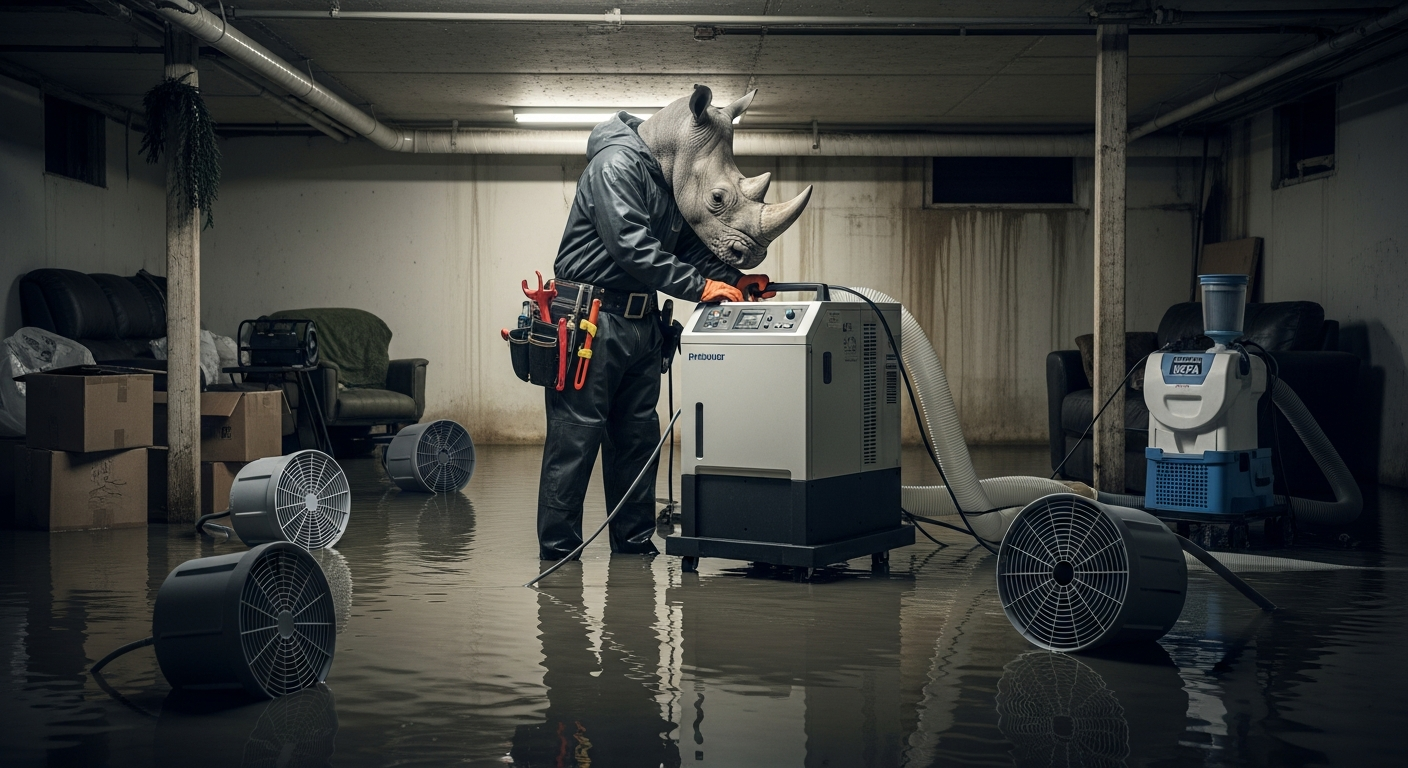
Expert Structural Drying in Houston
Visible water is only half the problem. After extraction, moisture continues to reside inside wall cavities, beneath flooring, in ceiling assemblies, and within structural framing — invisible to the naked eye but actively causing mold growth, wood rot, and structural deterioration. Our structural drying process uses psychrometric science and industrial equipment to systematically remove this hidden moisture, with daily monitoring and data logging to verify the drying system is performing to IICRC S-500 standards.
Rhino is Houston's trusted water damage restoration company — responding 24/7 with IICRC-certified technicians across Greater Houston.
Signs You Need This Service
- Recent water damage — even after visible water was removed
- Musty odor days after a water event
- Soft or spongy walls, ceilings, or floors
- Moisture reading above 16% on wood substrates
- Mold growth appearing after water damage
- Swelling or warping of materials
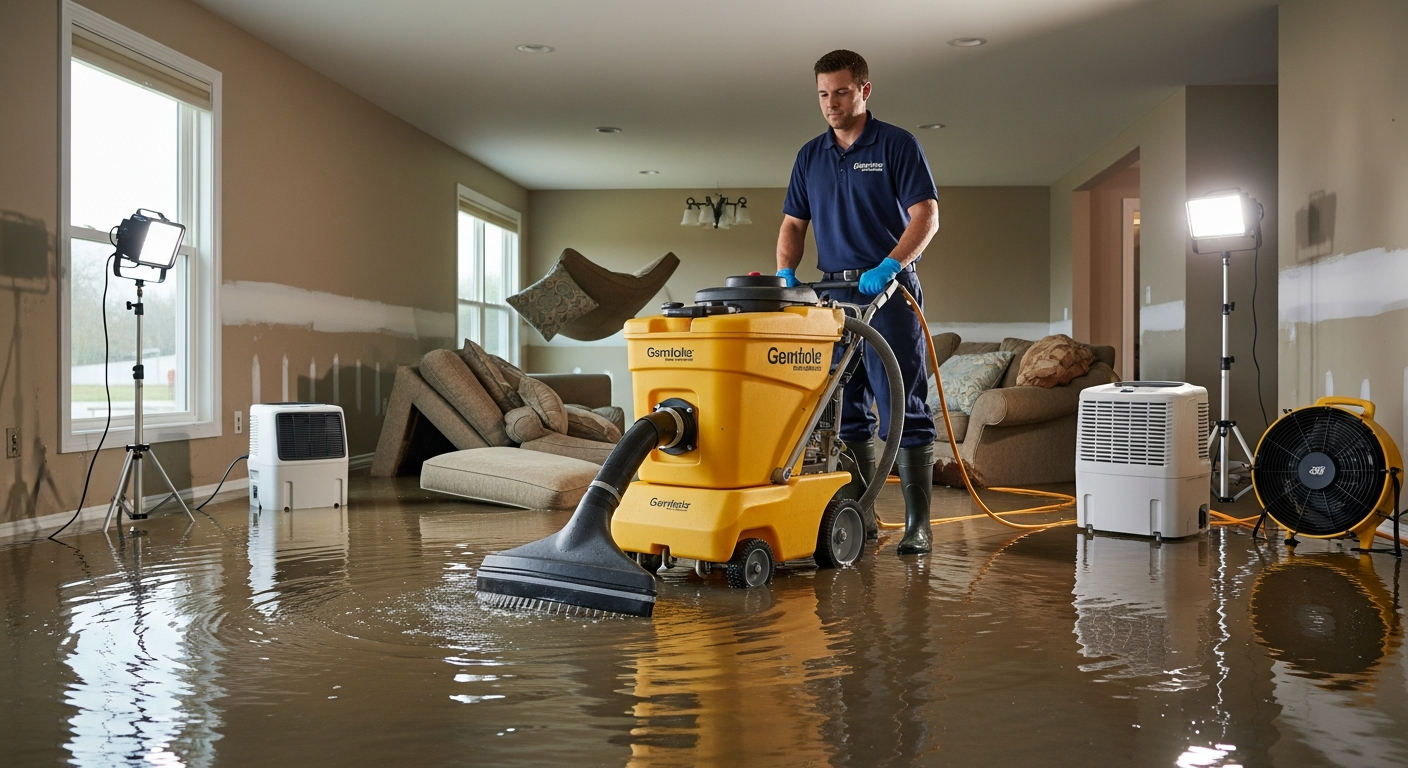
What's Included With Every Job
Our Step-by-Step Process
Moisture Mapping & Baseline
We scan every surface with thermal imaging cameras and penetrating moisture meters to map all wet areas — including hidden moisture inside walls, ceilings, and under floors. This defines the drying system scope.
Equipment Setup Using Psychrometrics
Air mover and dehumidifier placement is calculated using psychrometric principles — not guesswork. The goal is to create optimal airflow and vapor pressure differential to maximize evaporation speed.
Wall Cavity & Subfloor Drying
When moisture is trapped inside wall cavities or under flooring, we drill small access holes and use the Injectidry system to circulate air directly through hidden spaces — avoiding unnecessary demolition.
Hardwood Floor Drying
Specialty drying mats are applied directly to hardwood floors, creating a sealed drying chamber between the mat and the floor surface. Moisture is drawn out rapidly while the floor stays in place.
Daily Monitoring & Adjustments
A technician visits daily to take moisture readings at all measurement points, log psychrometric data, and adjust equipment placement or settings. Readings are tracked in a log that becomes part of your claim file.
Final Verification & Report
Drying is complete when all moisture readings have reached IICRC S-500 drying goals for the specific material type. We provide a written final report with all daily readings — required by most insurers.
Based in Houston. Serving All of Greater Houston.
Our technicians are staged across Houston to reach you in 45 minutes or less. We serve all of Harris County and surrounding communities — Sugar Land, Katy, The Woodlands, Pearland, Spring, Humble, Baytown, and Pasadena.
Frequently Asked Questions
Why can't I just run my home's HVAC to dry things out?
Your home's HVAC system is designed for comfort, not drying. It removes 1–3 pints of moisture per day. An industrial LGR dehumidifier removes 25–40+ pints per day. Using only your HVAC after a water event adds days or weeks to drying time and significantly increases mold risk.
How long does structural drying take?
A typical residential water loss takes 3–5 days to reach IICRC drying goals. Heavily saturated materials, concrete slabs, or large areas may take 5–10 days. We provide a completion estimate after the initial moisture mapping.
Do you have to open up my walls?
Not always. Our Injectidry system can often dry wall cavities through small drilled holes — much less invasive than cutting open drywall. When moisture penetration is severe, controlled demolition is more cost-effective and necessary to prevent mold.
What is an IICRC drying standard?
The IICRC S-500 is the industry standard for professional water damage restoration. It defines acceptable moisture content levels for different material types (wood, drywall, concrete) before a structure is considered dry. Insurance companies use S-500 compliance to evaluate claims.